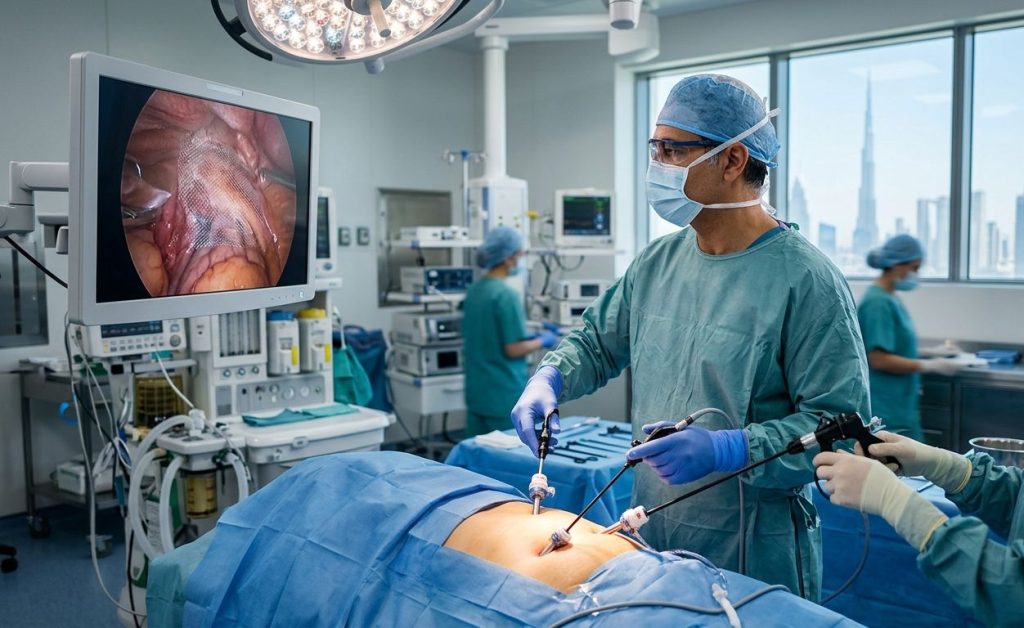


Laparoscopic Gastric Bypass Surgery in Dubai
Years of diets that worked temporarily, then didn’t. A body that responds less each time to the same effort. If you’ve reached the point where obesity is affecting your health rather than just your reflection in the mirror, the conversation you need isn’t about willpower — it’s about which surgical option is clinically right for you, and why.
Dr. Nazim Alrifai is a Consultant General Surgeon at Al Zahra Hospital Dubai with over 18 years of experience in general and laparoscopic surgery, offering personalized evaluation for both laparoscopic gastric bypass and gastric sleeve procedures. This guide explains how gastric bypass works, who is clinically eligible, how it compares to sleeve gastrectomy, and what a properly guided surgical pathway looks like from assessment to recovery.
What Is Laparoscopic Gastric Bypass Surgery?
Laparoscopic Roux-en-Y gastric bypass is a minimally invasive bariatric procedure that creates a small stomach pouch, roughly the size of an egg, and reroutes a segment of the small intestine to connect directly to it. This dual mechanism restricts the amount of food you can eat at one time and reduces the absorption of calories and certain nutrients, while also altering gut hormones that regulate hunger and blood sugar — an effect that begins improving conditions like type 2 diabetes even before significant weight loss occurs.
The procedure is performed through several small abdominal incisions using a laparoscope, providing a magnified, high-definition view that allows the surgeon to work with the same precision as open surgery, without a large incision.
Gastric Bypass vs. Gastric Sleeve: Understanding the Difference
Choosing between these two procedures is one of the most common questions patients bring to a bariatric consultation, and the right answer depends entirely on individual clinical factors.
Gastric Sleeve (Sleeve Gastrectomy)
This procedure removes approximately 80% of the stomach, leaving a narrow, banana-shaped sleeve. It is purely restrictive — reducing the volume of food the stomach can hold while also lowering ghrelin, the hormone responsible for hunger. It does not involve rerouting the intestine, which generally means a simpler procedure with a shorter operative time.
Gastric Bypass (Roux-en-Y)
Gastric bypass combines restriction with a degree of malabsorption, since a portion of the small intestine is bypassed. This tends to produce a more pronounced metabolic effect, particularly for patients with type 2 diabetes, significant acid reflux, or a very high starting BMI. It is technically more complex than sleeve gastrectomy and involves a longer operative time and a more detailed post-operative nutritional plan, including lifelong vitamin and mineral supplementation.
Which Procedure Is Right for You
Neither procedure is universally “better” — the appropriate choice depends on your BMI, existing metabolic conditions, history of acid reflux, and personal lifestyle factors. This is precisely why a personalized pre-operative assessment, rather than a generic recommendation, determines the correct surgical pathway for your specific case.
Who Is Eligible for Gastric Bypass Surgery?

Bariatric surgery eligibility follows internationally recognized clinical criteria, generally including:
- A Body Mass Index (BMI) of 40 or above, regardless of associated health conditions
- A BMI of 35 or above, accompanied by an obesity-related condition such as type 2 diabetes, hypertension, obstructive sleep apnea, or significant joint disease
- Prior documented, unsuccessful attempts at sustained weight loss through diet, exercise, or medical management
- A clear understanding of and commitment to the long-term dietary and lifestyle changes the procedure requires
- Clearance following a comprehensive medical, nutritional, and psychological evaluation
Why Choosing an Experienced Laparoscopic Surgeon Matters
Bariatric surgery involves altered anatomy that carries a narrower margin for technical error than most other laparoscopic procedures, making surgeon experience a decisive factor in long-term outcome, not simply a preference.
Anastomotic precision reduces serious complications. The connection created between the stomach pouch and small intestine must be constructed with meticulous technique — a leak or stricture at this junction is among the most serious complications in bariatric surgery, and its likelihood decreases substantially with surgical experience and case volume.
Accurate pouch sizing affects long-term results. A pouch created too large undermines the procedure’s effectiveness, while one created with excessive tension increases complication risk — a balance that depends on precise surgical judgment.
Comprehensive complication management. An experienced bariatric surgeon can recognize and address intra-operative findings such as unexpected adhesions, hiatal hernia, or anatomical variation without compromising the safety or effectiveness of the primary procedure.
Dr. Alrifai’s clinical background, spanning senior specialist and consultant roles across Al Zahra Hospital Dubai, Rashid Hospital, Damascus Hospital, and Al Adan Hospital, reflects the depth of surgical judgment that bariatric procedures of this complexity demand — the same precision-driven approach he brings to other advanced laparoscopic procedures, including gallbladder removal and hernia repair.
What to Expect: The Surgical Journey
Pre-Operative Assessment
Every patient undergoes a comprehensive evaluation, including a full medical history, relevant blood work, and assessment of any obesity-related conditions such as diabetes or sleep apnea. This step confirms surgical eligibility and identifies the procedure — bypass or sleeve — best suited to your individual health profile.
Personalized Care Planning
Your care pathway is built around your specific metabolic profile, comorbidities, and lifestyle, including a structured pre-operative diet to reduce liver volume and a tailored post-operative nutritional plan designed around the specific absorption changes of gastric bypass.
The Procedure
Performed under general anaesthesia through several small incisions, laparoscopic gastric bypass typically takes 90 to 150 minutes, depending on anatomical complexity.
Recovery and Post-Operative Prognosis
Most patients are mobile within hours and are typically discharged after one to two nights in hospital. A structured post-operative pathway includes a staged return to solid food, lifelong vitamin and mineral supplementation, and scheduled follow-up to monitor weight loss progress and nutritional status. Post-operative prognosis for patients who adhere to their dietary and follow-up plan is generally favourable, with significant improvement or resolution of conditions such as type 2 diabetes and hypertension commonly observed.
Benefits of the Laparoscopic Approach
- Smaller incisions and significantly reduced scarring compared with open bariatric surgery
- Shorter hospital stay and faster return to daily activity
- Reduced post-operative pain relative to open surgery
- Lower risk of wound infection and incisional hernia
- Meaningful, sustained weight loss alongside improvement in obesity-related conditions
- Often a more pronounced and rapid improvement in type 2 diabetes compared with restrictive-only procedures
Clinical Considerations and Guidelines
Bariatric surgery is guided by internationally recognized clinical protocols, including the established BMI and comorbidity thresholds for eligibility, a mandatory multidisciplinary evaluation involving nutrition and, where appropriate, psychological assessment, and a clearly defined post-operative supplementation and monitoring schedule to prevent nutritional deficiency. This structured, guideline-based approach — rather than the surgical technique in isolation — is what protects long-term safety and effectiveness.
Beyond the clinical pathway, it’s worth understanding the practical side of planning for surgery. Our guide to laparoscopic surgery cost in Dubai breaks down what typically drives pricing, and our article on insurance coverage for laparoscopic surgery explains what’s generally covered under DHA-compliant plans and how pre-authorization works.
Frequently Asked Questions
Is gastric bypass or gastric sleeve better for weight loss?
Both procedures produce significant, sustained weight loss, but gastric bypass often results in a somewhat greater overall weight loss and a more pronounced improvement in type 2 diabetes, due to its combined restrictive and metabolic effect. Gastric sleeve is generally a simpler procedure with a shorter operative time. The right choice depends on your BMI, existing health conditions, and a personalized clinical assessment.
What BMI is required for gastric bypass surgery?
Gastric bypass is generally considered for patients with a BMI of 40 or above, or a BMI of 35 or above with an obesity-related condition such as type 2 diabetes, hypertension, or sleep apnea, following a comprehensive medical evaluation confirming eligibility.
How long does recovery take after laparoscopic gastric bypass?
Most patients are mobile within hours of surgery and are discharged after one to two nights in hospital. Many return to light daily activity within one to two weeks, with a structured post-operative diet and follow-up schedule guiding the full recovery process.
Will I need to take supplements permanently after gastric bypass?
Yes. Because gastric bypass reduces nutrient absorption, lifelong vitamin and mineral supplementation — typically including vitamin B12, iron, calcium, and vitamin D — is a standard part of post-operative care, monitored through scheduled follow-up blood work.
Unsure Which Procedure Is Right for You?
Every metabolic profile is unique. Let Dr. Nazim Alrifai evaluate your BMI, medical history, and weight loss goals to build a personalized surgical roadmap.
Request a Personalized Evaluation
This information is for educational purposes and does not replace professional medical advice. Please consult with Dr. Nazim Alrifai for your specific clinical needs.