

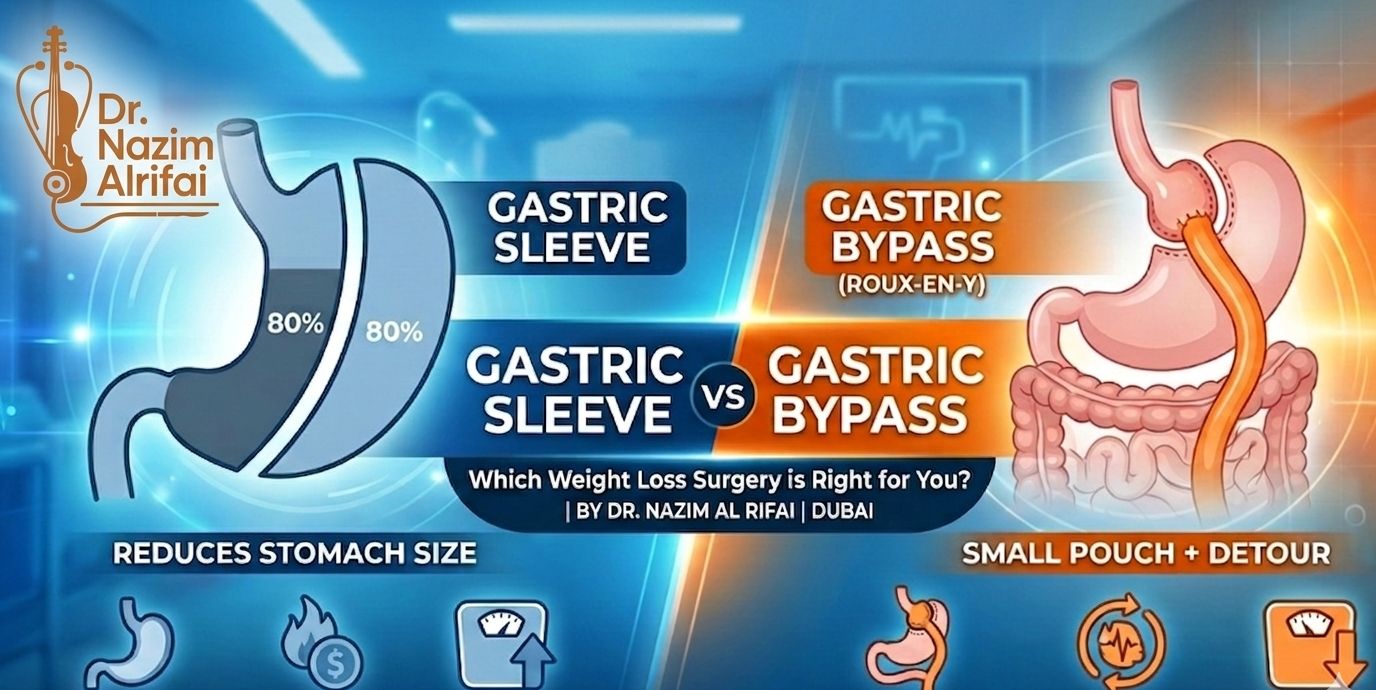
Gastric Sleeve vs Gastric Bypass
You have probably been here before a new diet, a structured programme, a promise of sustainable change. And for a while, perhaps it even worked. Then life intervened, the weight returned, and with it came something harder to name: a quiet erosion of confidence in your own body. If that resonates with you, I want you to know that this is not a failure of willpower. It is often a failure of the tools.
For many patients living with moderate to severe obesity, surgery is not a shortcut it is a clinically validated, life-extending intervention. When patients ask me about the choice between gastric sleeve vs gastric bypass, I remind them that both are powerful tools, but they are not interchangeable. The right procedure depends entirely on who you are, what your body is carrying, and what outcome truly matters to you.
As a consultant bariatric and metabolic surgeon practising in Dubai, Dr. Nazim Al Rifai has guided hundreds of patients through this exact decision. What follows is the same framework I use in the clinic, made accessible for every person considering their options.
Two Procedures, Two Philosophies
The Gastric Sleeve: Precision Restriction
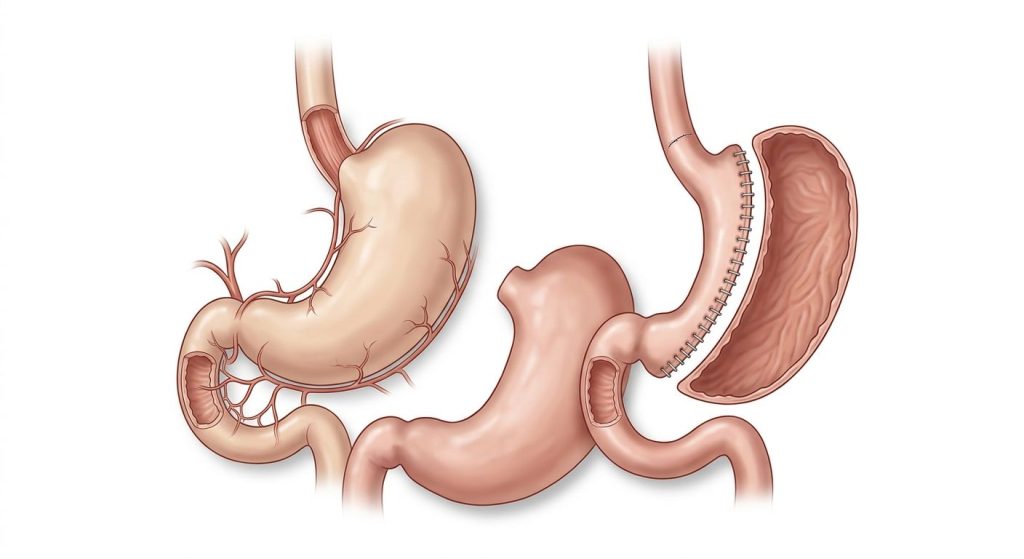
Sleeve gastrectomy commonly called the gastric sleeve works by permanently removing approximately 75–80% of the stomach. What remains is a narrow, tubular structure, roughly the size and shape of a banana. The mechanics are elegant in their simplicity: you physically cannot consume large volumes of food, and your hunger is profoundly reduced because the resected portion of the stomach produces the majority of ghrelin, the hormone most directly responsible for appetite signalling.
It is a single anatomical alteration, performed entirely laparoscopically. In my practice, operative time typically ranges between 45 and 75 minutes, with most patients spending one to two nights in the clinic before returning home.
The Gastric Bypass: Metabolic Reprogramming
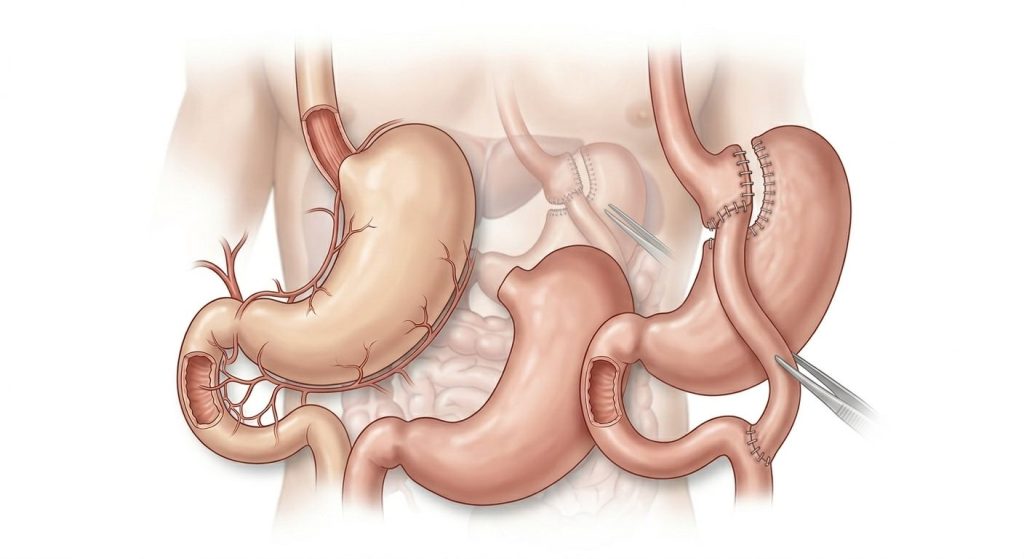
The Roux-en-Y gastric bypass is a fundamentally different intervention. Rather than simply reducing the stomach’s capacity, it restructures the entire upper digestive tract. A small stomach pouch is fashioned roughly the size of an egg and the small intestine is divided and reconnected, bypassing a significant section of the bowel.
This achieves two things simultaneously: restriction and malabsorption. Less food enters. Less of that food is absorbed. The metabolic effects are profound and, in many cases, transformative particularly for patients with Type 2 diabetes, where remission rates following bypass can exceed 80%, often within weeks of surgery and long before significant weight loss has occurred.
The bypass is a more complex procedure operating time runs between 90 and 150 minutes and it demands more from both surgeon and patient in the long term. This is why, for Dr. Nazim, the decision to recommend bypass is never taken lightly. It requires a comprehensive pre-operative evaluation that includes metabolic blood panels, endoscopy, nutritional assessment, and psychological readiness screening.
Clinical Comparison: Gastric Sleeve vs Gastric Bypass
The table below reflects the clinical parameters Dr. Nazim Al Rifai reviews during every bariatric consultation. It is not a checklist it is a conversation starter.
| Clinical Factor | Gastric Sleeve | Gastric Bypass |
|---|---|---|
| Surgical Mechanism | Stomach reduced by ~80% into a sleeve-shaped tube; no intestinal rerouting | Small stomach pouch created + small intestine rerouted (Roux-en-Y) |
| Expected Excess Weight Loss | 60–70% of excess body weight over 18–24 months | 70–80% of excess body weight over 18–24 months |
| Type 2 Diabetes Resolution | ~60–70% remission or significant improvement | ~80–85% remission often before significant weight loss |
| GERD / Acid Reflux Impact | May worsen or trigger new onset GERD in some patients | Typically improves or resolves chronic GERD symptoms |
| Operative Complexity | Moderate single anatomical alteration | Higher two-stage anatomical reconstruction |
| Average Operating Time | 45–75 minutes | 90–150 minutes |
| Hospital Stay (Dubai) | 1–2 nights | 2–3 nights |
| Return to Normal Activity | 3–4 weeks | 4–6 weeks |
| Reversibility | Permanent and irreversible | Technically reversible; rarely performed |
| Dumping Syndrome Risk | Rare | More common; managed with dietary adjustment |
| Long-Term Nutritional Needs | Vitamins B12, D, Iron, Calcium moderate monitoring | Comprehensive lifelong supplementation & quarterly labs |
| Ideal Clinical Profile | BMI 35–50; manageable comorbidities; no severe GERD | BMI 40+; severe T2 diabetes; chronic GERD; higher weight-loss target |
Who is the Right Candidate? Thinking Beyond BMI
BMI is a starting point, not a sentence. In his consultations, Dr. Nazim Al Rifai evaluates each patient across four clinical dimensions that go far beyond a single number on a scale.
1. Metabolic Health Profile
Patients with poorly controlled Type 2 diabetes, insulin resistance, or metabolic syndrome frequently see more dramatic improvements after bypass surgery. If your glucose management is a primary concern, bypass often delivers superior and faster metabolic results.
2. Gastrointestinal History
Chronic GERD (acid reflux) is a significant contraindication to sleeve gastrectomy. The sleeve reduces the stomach’s capacity but does not alter lower oesophageal sphincter pressure and can, in some patients, exacerbate reflux. Bypass, by contrast, tends to improve or resolve GERD through altered bile routing and reduced acid exposure.
3. Weight Loss Target and Timeline
If your excess body weight is substantial BMI exceeding 50, or BMI 40+ with multiple complex comorbidities the additional malabsorptive component of bypass may be clinically warranted. For patients with a BMI between 35 and 45 and well-managed comorbidities, the sleeve remains an excellent first-line option.
4. Lifestyle and Commitment to Follow-Up
Bypass surgery places rigorous demands on nutritional compliance. Quarterly blood panels, lifelong supplementation, and strict dietary discipline are non-negotiable. Dr. Nazim’s team in Dubai provides a structured 12-month post-operative programme to support every patient through this transition but the commitment must come from both sides of the table.
What Recovery Actually Looks Like in Dubai
Both procedures are performed using advanced laparoscopic techniques minimally invasive, precision-guided surgery through small incisions. There are no large abdominal scars, no extended bed rest, and no prolonged hospitalisation.
Gastric Sleeve: Recovery Timeline
- Days 1–3: Clear liquids only; mild discomfort managed with non-opioid analgesia
- Week 2: Graduated to full liquids and soft foods; most patients are ambulatory
- Weeks 3–4: Return to desk-based work; gentle walking programme initiated
- Week 6: Structured diet with most food groups reintroduced under dietitian guidance
Gastric Bypass: Recovery Timeline
- Days 1–4: Hospital monitoring; IV nutrition transitioning to clear liquids
- Weeks 2–3: Liquid and pureed diet phase; fatigue common but manageable
- Weeks 4–5: Return to light activity; dietary complexity gradually increased
- Week 8+: Most patients functioning at full capacity with ongoing nutritional monitoring
| “Recovery is not just about what the body heals it’s about what the patient builds during that window. My team works with every patient to ensure those first eight weeks create the foundation for a lifetime of results.” — Dr. Nazim Al Rifai |
Why Patients Choose Dr. Nazim Al Rifai for Weight Loss Surgery in Dubai
Dubai’s private healthcare landscape is exceptional and so are its patients. The individuals who come through my clinic are typically well-researched, high-achieving, and clear about what they want: results without compromise.
What differentiates the programme I have built is not simply technical expertise though that matters. It is the architecture of care that surrounds the surgery itself:
- Pre-operative mapping: Every patient undergoes a full metabolic panel, body composition analysis, endoscopic evaluation, and nutritional baseline before a surgical recommendation is made.
- Surgical precision: All procedures are performed using advanced laparoscopic instrumentation with intraoperative leak testing as standard not optional.
- Multidisciplinary team: A specialist bariatric dietitian, clinical psychologist, and dedicated patient coordinator work alongside me from consultation through to 12-month follow-up.
- Transparent pricing: Comprehensive, all-inclusive packages with no hidden fees. We work with major UAE insurers and can provide detailed cost breakdowns upon request.
- Concierge experience: From your first enquiry to your final follow-up, your care is managed with the same discretion and attentiveness you would expect from any premier Dubai medical institution.
Frequently Asked Questions
Q1: What is the main difference between gastric sleeve and gastric bypass?
The gastric sleeve removes approximately 80% of the stomach, creating a smaller, tube-shaped stomach that limits food intake and reduces hunger hormones. The gastric bypass goes further it creates a small stomach pouch and reroutes part of the small intestine, restricting both how much you eat and how many calories your body absorbs. Both are highly effective, but they work through different mechanisms and suit different patient profiles. During your consultation, Dr. Nazim Al Rifai will determine which approach is clinically appropriate for your specific case.
Q2: Which procedure produces more weight loss sleeve or bypass?
Gastric bypass typically produces slightly greater excess weight loss around 70–80% over 18 to 24 months, compared to 60–70% with the gastric sleeve. However, weight loss is only one variable. For many patients, the sleeve delivers outstanding long-term results with fewer nutritional demands. The goal is not simply the highest number it is the most sustainable, medically appropriate outcome for your body.
Q3: Is gastric bypass better for Type 2 diabetes?
Yes in most cases. Gastric bypass consistently demonstrates diabetes remission rates of 80–85%, often within weeks of surgery and before significant weight loss occurs. This is due to the hormonal and metabolic changes triggered by intestinal rerouting. The gastric sleeve also improves diabetes significantly, with remission rates of approximately 60–70%. For patients whose primary concern is metabolic disease, Dr. Nazim Al Rifai often recommends bypass as the stronger clinical tool.
Q4: Can I have gastric sleeve surgery if I suffer from acid reflux (GERD)?
This is one of the most important questions to raise during your consultation. The gastric sleeve can worsen or trigger new-onset GERD in a subset of patients, due to increased intragastric pressure following stomach reduction. If you have pre-existing chronic acid reflux, gastric bypass is generally the preferred option it tends to improve or fully resolve GERD symptoms by altering bile flow and reducing acid exposure. Dr. Nazim will conduct an endoscopic evaluation before making any surgical recommendation.
Q5: How long is the recovery after bariatric surgery in Dubai?
Recovery varies between procedures. After a gastric sleeve, most patients return to desk-based work within three to four weeks. After a gastric bypass, full recovery typically takes four to six weeks. Both procedures are performed laparoscopically, which means smaller incisions, significantly less post-operative pain, and no prolonged bed rest. Dr. Nazim Al Rifai’s clinic provides a structured recovery programme including dietary guidance, physiotherapy referrals, and weekly follow-up check-ins throughout the first three months.
Q6: Is weight loss surgery in Dubai safe?
When performed by a qualified, experienced bariatric surgeon using advanced laparoscopic techniques, both gastric sleeve and gastric bypass carry an excellent safety profile. At Dr. Nazim Al Rifai’s clinic in Dubai, every patient undergoes a thorough pre-operative evaluation including metabolic blood panels, cardiac screening, endoscopy, and nutritional assessment before surgery is approved. Intraoperative leak testing is performed as standard on every procedure. Dubai’s private hospital infrastructure is also world-class, ensuring that post-operative monitoring meets the highest international benchmarks.
Q7: How much does bariatric surgery cost in Dubai?
The cost of weight loss surgery in Dubai varies based on the procedure, the surgical facility, and the scope of post-operative care included. Dr. Nazim Al Rifai’s clinic offers transparent, all-inclusive pricing packages with no hidden fees. Detailed cost breakdowns are provided during your private consultation. Some UAE insurers cover bariatric surgery under specific medical criteria our patient coordination team can assist you in verifying your coverage and preparing the necessary documentation.
Q8: How do I know which surgery is right for me?
There is no universal answer and any surgeon who tells you otherwise without a full clinical evaluation should give you pause. The right procedure depends on your BMI, metabolic health, gastrointestinal history, weight loss goals, and lifestyle. Dr. Nazim Al Rifai conducts a comprehensive, multi-disciplinary assessment before recommending any intervention. The goal of your first consultation is not to sell you a procedure it is to understand your full picture and map out the most appropriate surgical strategy for you specifically.
The Right Surgery Is the One Built Around You
Neither the sleeve nor the bypass is categorically superior. The best bariatric procedure is the one that is precisely matched to your clinical profile, your lifestyle, and the life you are working towards. That determination cannot be made from a blog post it requires a conversation, a clinical examination, and a surgeon who has both the experience and the intellectual honesty to tell you what is right for you, not just what is popular.
When you sit across from Dr. Nazim Al Rifai in a private consultation, that is exactly what you will receive. Not a procedure recommendation a personalised surgical strategy, built around who you are and where you want to go.
Your next step is one conversation.
Book a private consultation with Dr. Nazim Al Rifai and receive a personalised surgical assessment no pressure, no obligation.
www.drnazimalrifai.com · +971 55 335 1052
By Dr. Nazim Al Rifai | Consultant Bariatric & Metabolic Surgeon
Advanced Laparoscopic & Robotic Weight Loss Surgery · Dubai, UAE